Hurricane-Proof Your AC: A South Florida Homeowner's Storm Prep Guide
Prepare your AC for hurricane season in Broward County with this comprehensive guide. Learn how to protect your unit before, during, and after a storm.
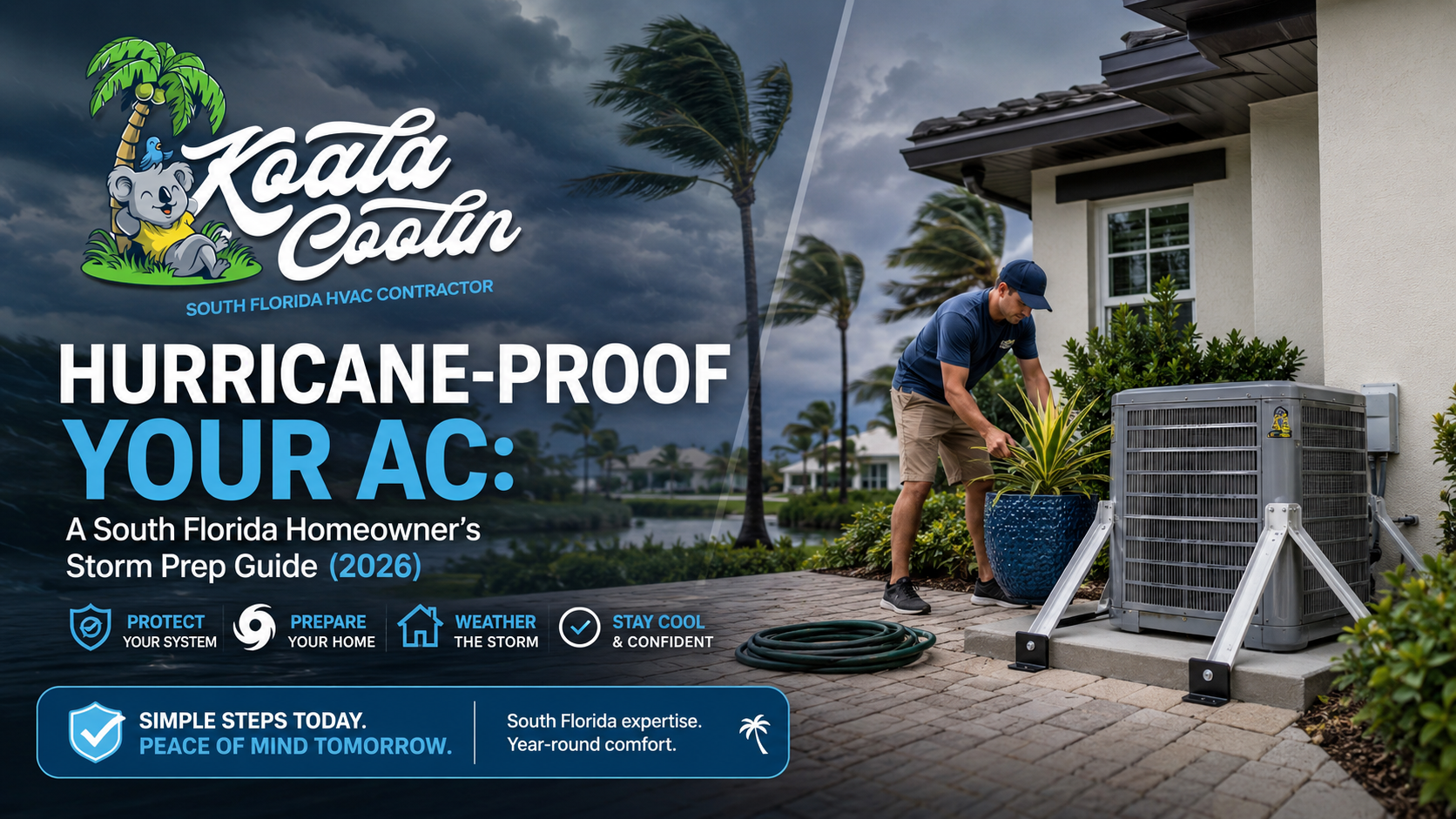
It's storm season in Broward County, and your air conditioner is one of the most valuable appliances attached to your home. Protecting it from hurricane damage is crucial to ensuring it serves you well throughout the hot South Florida months. Here's how to prepare your AC unit effectively.
Preparing Your AC Before the Storm
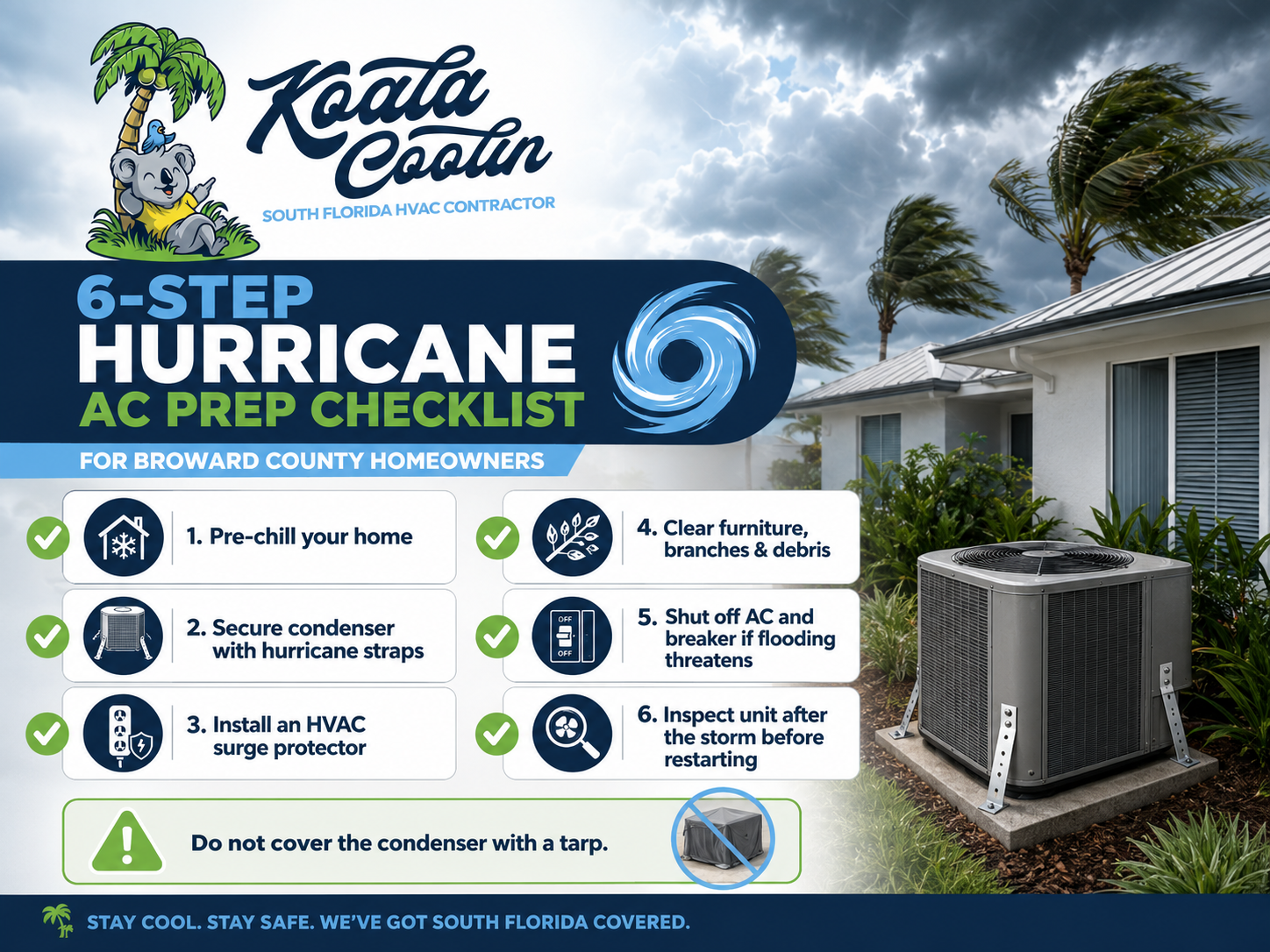
When a hurricane is in the forecast, it's time to take action. Pre-chill your home to ensure comfort in case of power outages. This will help maintain a cooler indoor temperature for longer if your AC goes offline.
Secure Your Condenser
Check if your AC unit has hurricane tie-down straps. Current Broward County codes require these on new installations, but older homes may need to retrofit them. These straps prevent your condenser from tipping over in high winds.
Install an HVAC Surge Protector
Power surges after outages can damage your AC compressor. Installing an HVAC surge protector can prevent costly repairs by shielding your system from electrical spikes.
Clear the Area
Remove patio furniture and trim branches near your unit to prevent debris from damaging the condenser. Coastal areas like Lauderdale-by-the-Sea are particularly vulnerable to salt-air corrosion, so regular maintenance is crucial.
What to Do When the Storm Arrives
Should you turn off your AC during a hurricane? Yes, it's best to shut off your AC once the storm is imminent. This reduces the risk of electrical damage and prevents the system from pulling in moisture-laden air.
Shut Off the Breaker
If flooding or storm surge is a threat, turn off the breaker to your AC unit. This prevents electrical hazards and potential damage to the system.
Avoid Covering the Condenser
While it might seem wise to cover your condenser with a tarp, doing so can trap moisture, causing more harm than good. It's better to leave it uncovered to allow proper airflow.
Assessing Your AC After the Storm
Once the storm passes, perform a visual inspection before restarting your AC. Look for debris in the fan, check if the unit has shifted on its pad, and inspect for water lines on the cabinet.
Check for Water Damage
Water exposure can damage electrical components. If you notice any issues, it might be best to contact a professional for storm damage AC repair.
Safe Restart vs. Professional Help
If everything looks intact, you can attempt a DIY restart. However, if you're unsure, or if the unit doesn't power on, call Koala Coolin for expert assistance.
Document for Insurance
Take photos of any damage before starting cleanup. This documentation can be crucial for insurance claims related to AC hurricane damage.
Frequently Asked Questions
Should I turn my AC off during a hurricane?
Yes, turning off your AC during a hurricane protects it from electrical damage and moisture issues.
Will my homeowner's insurance cover AC hurricane damage?
Most policies cover damage from natural disasters, but it's best to review your policy or contact your insurer for specifics.
Do I need hurricane straps on my AC unit in Florida?
Yes, Florida's building codes require hurricane straps on new AC installations. Older units may need retrofitting.
Why is my AC not working after the storm?
Electrical issues, debris, or water damage might be the cause. It's best to have a professional assess and repair the unit.
If your AC sustained storm damage or won't restart, Koala Coolin offers AC service in Fort Lauderdale and throughout Broward County, 24/7. Call (754) 282-7082 or request a free estimate today.